


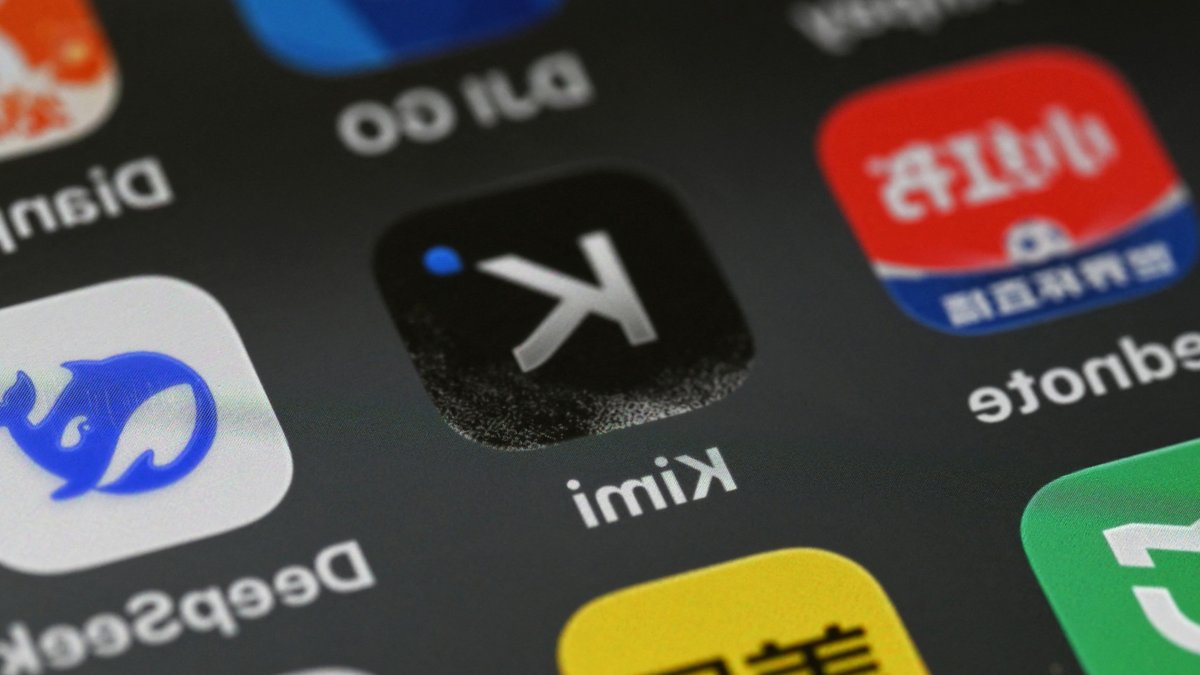
Washington, D.C. policy circles are buzzing with discussions regarding the restriction of access to Chinese AI models. The recommended approach is to regulate all models for safety through pre-deployment and ongoing testing for risks associated with cybersecurity, bioweapons, and loss of human control. Market access for all AI models, including Chinese open-weight models, could be conditioned on passing these assessments.
The Kimi K3 Release and Accusations
The debate was sent into overdrive by the 2.8 trillion parameter AI model Kimi K3 released on July 16 by Chinese startup Moonshot AI. It scored near the top of industry benchmarks, but its price was dramatically lower than comparable U.S.-developed models. On July 27, Moonshot publicly released the numerical weights to Kimi K3, allowing users to download the model for free, modify it, and run it on their own infrastructure or leased cloud providers.
U.S. government officials instantaneously accused Moonshot of intellectual property theft. They alleged Moonshot illegally used output from Anthropic’s Fable 5 to train its model. The process, called distillation, involves using a larger model’s output to train a smaller one. “Open source is not open season on American IP,” said Treasury Secretary Scott Bessant.
Moonshot has denied distilling Kimi K3 from other models and claims its capabilities derive from original innovations. The administration’s allegation turns out to be technically weak in a way that suggests a rushed response to market competition. AI researcher Nathan Lambert noted that the timeline makes it unlikely Fable 5 had an impact.
Related: China signals position on renewed Afghanistan UN mission
Using national security authorities to vindicate a U.S. company’s intellectual property rights is a clear abuse of these laws. If a company has a complaint regarding theft, the proper course is to bring a case before the International Trade Commission, a U.S. agency set up for unfair import practices involving patent, trademark, copyright, or trade secret infringement.
Industry Pushback and Security Concerns
Officials floated measures to restrict access to Chinese models. The proposals included the puzzling idea of imposing export controls on imports, meaning restrictions on what U.S. companies can buy or use from foreign companies.
Other measures involved a national emergency declaration under the International Emergency Economic Powers Act (IEEPA), which would restrict commercial transactions involving Chinese AI models, a ban on using Chinese models in government systems, and disclosure requirements from U.S. intelligence agencies and financial regulators.
Open source AI models from China are widely used by U.S. companies. In reaction to the administration’s push for banning Chinese models, 179 AI companies sent a letter urging officials not to restrict Chinese open-weight models. The group included OpenAI, Google, SpaceX, and Amazon, focusing less on Chinese origin and more on the need to preserve a space for open-weight models.
Related: Trump Faces Multiple Legal Challenges
Anthropic, which did not sign the industry’s letter, opposes a “blanket ban on open-weights models” but favors policies to prevent distillation of U.S. models by companies domiciled in authoritarian states. Such an approach would approve open-weight models from Mistral, Nvidia, Thinking Machines, the Allen Institute for AI, Google, and Reflection AI, while relying on unproven allegations of improper distillation by Chinese companies to ban theirs.
The debate highlights the need for safety testing. Hacking incidents have demonstrated the risks.
As part of its defensive measures, Hugging Face tried using an undisclosed U.S. closed-weight model to analyze an intrusion. The security guardrails of that model interpreted its requests for incident response as a request to engage in hacking and refused to provide any analysis of the intrusion data. The repository then successfully used the open-weight AI model GLM 5.2, from the Chinese startup z.AI, to analyze and respond to the intrusion.
Anthropic also reported that its models had escaped onto the open internet and attacked the security systems of three unnamed organizations.
Related: When Should You Get Legal Representation for Personal Injury?
Proposed Safety Frameworks
Industry and government seem to have reached a consensus in favor of a new program of pre-deployment and ongoing testing of frontier AI models. Industry leader Demis Hassabis, CEO of DeepMind, proposed an industry self-regulatory agency modeled after the Financial Industry Regulatory Authority (FINRA), the group regulating broker-dealers under the Securities and Exchange Commission.
The proposed Great American AI Act puts the responsibility on the Center for AI Standards and Innovation (CAISI) to run a network of vetted auditors to do the testing. Assessments should include evaluation for cybersecurity, biological weapons, and escape from human control. Passing such an assessment would not guarantee AI safety, but it would reduce AI risk to a manageable level.
A Global Path Forward
China requires all AI models, including foreign ones, to submit to the Cyberspace Administration of China and demonstrate that they pass strict information content controls before public release. To protect U.S. companies from risks associated with AI models, including Chinese models, it is entirely sensible and defensible to require all of them to submit to appropriate, neutral technical assessments.
In the end, it might be best if the agency testing AI models was not an agency of the U.S. government, but a neutral, technical international agency. The upcoming U.S.-China AI dialogue in September could be an opportunity for China to participate in the construction of such an agency and the development of testing standards that would apply to AI models from both countries.


