


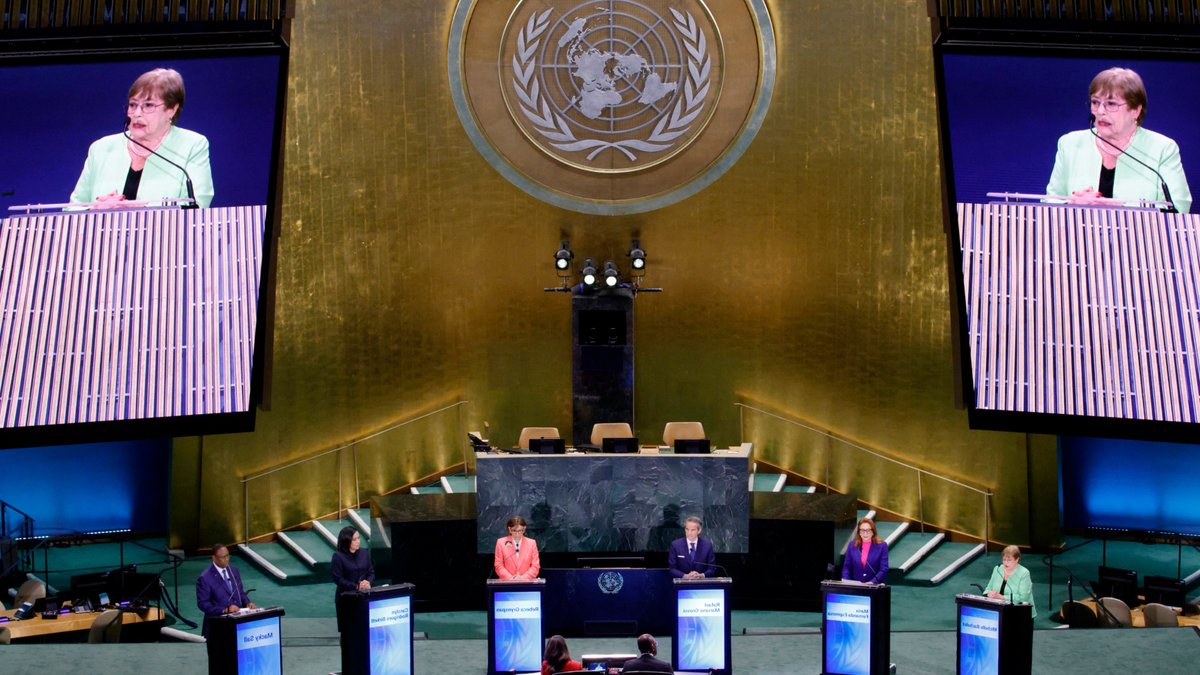
The United Nations faces an unprecedented financial crisis and deep geopolitical divisions as it searches for its next leader. This search occurs during one of the most consequential periods in the organization’s more than 80 years, with mounting violations of international law, an ongoing climate crisis, a global retreat from democracy, and a rapidly intensifying backlash against gender equality testing the system’s credibility. Only eight candidates were nominated to replace António Guterres, with seven currently standing: Michelle Bachelet from Chile, Maria Fernanda Espinosa from Ecuador, Rafael Grossi from Argentina, Rebeca Grynspan from Costa Rica, Carolyn Rodrigues-Birkett from Guyana, Olara Otunnu of Uganda, and Macky Sall from Senegal. This number is less than two-thirds of the 2016 field, which saw 13 individuals enter the race. The limited pool raises concerns about global confidence and the specific reasons for the dearth of female nominees for the organization’s top job.
The organization is experiencing a difficult time. Visionary leadership is a must to meet these challenges, which test not only the organization’s effectiveness but also the credibility of the United Nations system writ large.
They are dealing with financial struggles and geopolitical issues. The limited number of candidates is a concern. It reflects a lack of global confidence in the organization, raising troubling questions about the determination of member states to identify the strongest possible leader. The dearth of female nominees is also a issue, especially since no woman has ever served at the helm. Currently, only four of the seven remaining candidates are women. The 1 For 8 Billion campaign has declared that after 80 years of men-only leadership it is time for a woman to serve, and 112 member states have expressed strong support for this outcome based on official statements delivered in U.N. forums.
Related: Trump Faces Rising Legal Challenges
António Guterres’ replacement will have to address these challenges. Leadership must be committed to strengthening multilateralism, bridging the humanitarian-development-peace nexus, and demonstrating an unwavering moral compass in the face of growing geopolitical polarization.
Although no formal rule exists, many member states consider 2026 to be the turn of the Latin American and Caribbean group.
The United Nations’ next leader will have a difficult task ahead. They will need to address the organization’s financial and geopolitical challenges.


